Last updated: November 05, 2026
Quick Answer: the safest natural deodorant is usually the one with the fewest triggers for your skin, and many people do best with a fragrance-free magnesium formula rather than a baking soda stick. In Natural deodorant ingredients and skin safety — The Complete Guide, the main risk factors are baking soda, essential oils, and heavy fragrance, while gentler formulas usually rely on magnesium, zinc ricinoleate, arrowroot, or cornstarch to manage odor and moisture.
Key Takeaways
- A skin-safe natural deodorant controls odor while minimizing irritation, usually by avoiding the harshest alkalizers and strongest scents.
- Baking soda is the main warning sign for sensitive skin, especially when it does most of the odor blocking.
- Magnesium-based formulas are often a better starting point for sensitive skin than baking soda formulas.
- A good safe formula usually has 5 to 10 recognizable ingredients, not a long list.
If your underarms sting, peel, or darken after switching to a natural formula, the problem is often not “natural” versus “synthetic.” It is pH, fragrance load, or a high-alkaline powder sitting on a thin, sweaty patch of skin for hours. I write about personal care ingredients and skin compatibility, and Natural deodorant ingredients and skin safety — The Complete Guide comes down to one question: do you need the strongest odor control, or the lowest chance of irritation? According to the American Academy of Dermatology, fragrance is a common cause of contact dermatitis, and the U.S. National Library of Medicine’s MedlinePlus notes that contact dermatitis can appear as redness, itching, or burning. American Academy of Dermatology | MedlinePlus: Contact dermatitis
What actually makes a natural deodorant skin-safe?

A skin-safe natural deodorant is one that controls odor without pushing your underarms into irritation, and that usually means avoiding the harshest alkalizers and the most aggressive scent load. That sounds simple, but the ingredient list matters more than the marketing.
The most common odor-fighting ingredients in natural formulas fall into a few buckets:
- Baking soda (sodium bicarbonate): very effective at neutralizing odor, but also the most common irritation trigger. It is alkaline, and underarm skin is sensitive. If a formula uses a lot of it, that is a real trade-off, not a minor detail.
- Magnesium hydroxide or magnesium carbonate: often gentler than baking soda, with odor control that is usually good enough for everyday wear. These are common in “sensitive skin” formulas.
- Zinc ricinoleate: odor-trapping rather than sweat-stopping. It does not block perspiration, but it can help a formula work without a harsh acid-base effect.
- Arrowroot powder, cornstarch, kaolin clay: these absorb moisture. They can make a formula feel drier, though they do not stop odor on their own.
- Essential oils and fragrance: these may make a product smell pleasant, but they are a frequent source of contact dermatitis. Tea tree, lavender, citrus oils, and peppermint are common culprits.
The ingredient that most often decides whether a product is kind to skin is not the “natural” label. It is the total irritant load. A formula with baking soda plus multiple essential oils plus alcohol-based fragrance is much more likely to bother someone than a plain magnesium-and-starch stick. Dermatology guidance from the National Eczema Association also emphasizes that fragrance and harsh additives can be problematic for reactive skin. (Source: National Eczema Association)
A practical way to read an ingredient panel is this: if the formula is trying to do three jobs at once — odor control, moisture absorption, and strong scent — it may work well for some people but it is not the safest first pick for reactive skin. If you already know you get razor burn, eczema, or heat rash easily, start with fragrance-free or very lightly scented formulas and patch test before using them daily. For a closer look at ingredients, see also the guide to natural deodorant ingredients, fragrance-free deodorant, and how to patch test skin care.
The ingredients most likely to irritate your underarms
Baking soda is the biggest red flag for sensitive skin, especially in formulas that rely on it as the main odor blocker. It is effective, but it can be too effective at changing the skin environment.
Why does that matter? Underarm skin is thin, frequently shaved, and often rubbed by clothing. That combination already weakens the barrier. Add a high-alkaline powder and you can get redness, burning, or a rash that looks like a mild chemical burn. Some people tolerate baking soda for years; others react in a few days. The point is not that it is “bad.” The point is that it is a high-risk ingredient if your skin is already reactive.
Essential oils are the next issue. Lavender, tea tree, bergamot, lemongrass, and peppermint are common in natural formulas, but they are also common sensitizers. A product can smell “clean” and still be rough on skin. Citrus oils add another problem: some are photoreactive, and while underarms are usually covered, the bigger concern is irritation rather than sun exposure.
Then there is fragrance, including “parfum” or “aroma.” That single word can hide a blend of dozens of compounds. If your skin breaks out easily, fragrance-free is the safer choice. This is one of those cases where an unscented stick is usually better than a “fresh botanical” one.
A few other ingredients deserve a quick mention:
- Alcohol denat. can sting freshly shaved skin.
- Coconut oil can be soothing for some people, but it can also feel greasy and may clog pores in some users.
- Shea butter is usually well tolerated, though heavier balms can feel occlusive.
- Aloe can soothe, but botanical extracts still can irritate a minority of users.
For people with eczema, contact dermatitis, or a history of reaction to scented body products, the safest route is to keep the formula simple rather than rely on a “natural” halo. Choose a short ingredient list, avoid baking soda, avoid strong fragrance, and patch test for 24 to 48 hours on a small area before regular use. If you have persistent rash, cracking, or swelling, a dermatologist should rule out allergy or intertrigo.
Which natural deodorant base is gentlest on sensitive skin?

Magnesium-based formulas are often the best first choice for sensitive skin because they tend to be less irritating than baking soda while still controlling odor. They are not magic, but they are the most balanced option for many people.
Here is the practical hierarchy:
-
Magnesium-based deodorants
Best for people who want a gentler formula and can accept moderate odor control instead of maximum performance. Magnesium hydroxide is common in “sensitive skin” products. It works by making the skin environment less friendly to odor-causing bacteria without the same harsh pH swing that baking soda can create. -
Zinc ricinoleate formulas
Best when odor control matters more than dryness. Zinc ricinoleate traps odor molecules, so the formula can stay relatively mild. It often appears in premium sticks and creams. -
Starch- or clay-heavy formulas
Best for people whose main issue is dampness rather than odor. Arrowroot, cornstarch, and kaolin can help a formula feel drier, but by themselves they do not solve smell very well. -
Baking soda formulas
Best only for people who sweat a lot and know their skin tolerates alkaline powders. If you have ever had a rash from “natural” deodorant, this is the ingredient to suspect first.
There is also a texture issue that matters more than many buyers realize. Creams in jars often use oils and butters that spread easily and can feel milder, while sticks are more convenient but can be denser and more occlusive. A creamy balm may be easier to apply thinly, which can reduce irritation. A hard stick can drag on shaved skin and cause friction.
For someone who wants the best chance of comfort, I would start with a fragrance-free magnesium formula in a stick or cream, preferably one that also uses zinc ricinoleate or a light starch base. Skip the “extra strong” scent blends. They are usually the least forgiving. If you are comparing formats, you may also want the page on best deodorant for sensitive skin.
What a safe ingredient list looks like in real life
A good safe formula usually has 5 to 10 recognizable ingredients, not a laundry list. The fewer potential irritants, the easier it is to spot the problem if your skin reacts.
A strong candidate for sensitive skin often looks something like this:
- magnesium hydroxide
- arrowroot powder or cornstarch
- shea butter or cocoa butter
- coconut oil or caprylic/capric triglyceride
- beeswax, if it is a stick
- zinc ricinoleate, if included
- minimal or no fragrance
That structure gives you a few things at once: odor control, some moisture absorption, and a texture that stays on skin. It also avoids the most common irritants. If the formula is marketed as “natural,” but the ingredient list starts with baking soda and ends with five essential oils, I would not call that a gentle product.
Common allergens to watch for:
- Coconut: not a universal allergen, but relevant for people with sensitivities.
- Beeswax: fine for many people, but avoid if you need vegan products.
- Lanolin: effective in balms, but a known allergen for some users.
- Shea and cocoa butter: usually well tolerated, but still worth noting if you have nut-related sensitivities or simply do not like heavier occlusive formulas.
- Cornstarch: if you avoid corn derivatives, use arrowroot or tapioca starch instead.
- Essential oils: the biggest category to avoid if you have a history of fragrance allergy.
If you want the lowest-risk route, look for labels that say fragrance-free rather than merely “unscented.” Unscented can still mean masking fragrance is used to cover raw ingredient odor. That small wording difference matters.
One more point that generic advice often misses: skin-safe does not always mean shave-safe. A formula may be tolerated on unshaved skin but sting for hours after shaving because micro-abrasions let the ingredient penetrate more deeply. If your skin is fresh from a razor, give it time before applying any active deodorant, even a natural one.
Natural deodorant ingredients and skin safety: how to choose for your skin type
The right ingredient choice depends mostly on whether your skin is dry, reactive, oily, or prone to odor over sweat. The formula should solve the problem you actually have, not the one the package promises to fix.
For reactive or eczema-prone skin, the safest starting point is magnesium hydroxide with no baking soda and no fragrance. This is the group most likely to benefit from a minimal formula, because every extra botanical oil is another possible irritant. A balm or cream with a short ingredient list usually beats a heavily scented stick.
For people who sweat moderately but react to baking soda, zinc ricinoleate plus starch is often a better fit than an alkaline formula. It gives odor control without the same stinging risk. The trade-off is that it may need reapplication on hot days.
For heavy sweaters, natural deodorant alone may not be enough. Here the limitation is important: deodorant changes odor, not sweat production. If you need true sweat reduction, you are talking about antiperspirants, which are a different category. A natural formula can still help with smell, but it will not stop wetness. For a comparison, see the guide to deodorant vs antiperspirant.
For shaved skin, choose a low-friction texture. A cream spread in a thin layer is often kinder than a very hard stick. Avoid strong essential oils and alcohol.
For teenagers or first-time users, the best pick is usually the most boring one: fragrance-free, baking-soda-free, and simple. That gives the skin a chance to adapt without layering in scent sensitivity at the same time.
The biggest mistake I see in ingredient-shopping is assuming the strongest smell protection is the safest choice. It is often the opposite. The stronger the smell and the more “active” the formula feels, the higher the odds that something in it is irritating the underarm barrier.
If you are choosing between a “natural” product that occasionally burns and a plain fragrance-free formula that needs reapplication, I would take the boring formula every time. Comfort beats marketing.
What the label will not tell you
The label can tell you the ingredients, but it will not tell you how often a formula stings on shaved skin, whether the fragrance load is high, or whether the stick is too hard for daily use. Those are the hidden problems.
A few label blind spots matter a lot:
- “Natural” is not a safety standard. It is a marketing term. Poison ivy is natural too.
- “Sensitive skin” is not regulated in the way people assume. It can mean gentle formulation, or it can mean nothing more than a softer scent.
- “Aluminum-free” does not automatically mean skin-friendly. Many people want to avoid aluminum salts, but the substitute formula can still be irritating.
- “Clean” is not a technical term. It does not tell you if baking soda or fragrance is present.
- “Unscented” may still contain masking fragrance.
This is where a more careful decision pays off. If a product does not clearly identify the deodorizing active, I would be cautious. If the formula is packed with botanical extracts but does not explain the base ingredients, the product may be more about branding than comfort.
There is also the issue of performance drift over time. A formula can seem fine for the first week and then start irritating the skin as the barrier gets repeatedly exposed. That is why a patch test matters, but a patch test on the forearm is not a perfect substitute for underarm use. It is still useful for spotting obvious allergy, just not the full story.
For people who want a cleaner, more evidence-based choice, the best shopping move is to compare formulas by function:
- odor control ingredient
- moisture absorber
- fragrance level
- texture
- known allergens
That five-part check tells you more than any front-label claim.
If you want a broader skin-safety reference, the American Academy of Dermatology’s consumer guidance on fragrance and contact dermatitis is useful, and the U.S. National Library of Medicine’s MedlinePlus pages on contact dermatitis and allergic reactions are a reliable starting point for understanding when irritation becomes a medical issue. For ingredient-level checking, the U.S. Food and Drug Administration’s cosmetics guidance is also helpful. FDA cosmetics
The Verdict: which natural deodorant ingredient profile to choose?
Choose magnesium-based, fragrance-free, baking-soda-free formulas if your skin is sensitive, you shave regularly, or you have reacted to natural deodorant before. Choose zinc ricinoleate or mild starch-based formulas if you need better odor control but still want to avoid the sting that baking soda can cause. Neither if you need sweat control first, because deodorant will not replace an antiperspirant for heavy perspiration.
That is the clearest recommendation I can make. For most people with ordinary odor and touchy underarms, a simple magnesium formula is the safest place to start. For people who smell quickly but do not want irritation, zinc ricinoleate is the next best bet. For people who have already had a rash from natural formulas, baking soda is the ingredient to avoid first, not last.
When does the answer change?
The verdict flips in a few specific situations, and those exceptions matter more than the average case.
If you tolerate baking soda without any redness or burning, it can be the strongest odor-fighting option. Some bodies simply handle it well. If a baking soda formula has worked for you for months, there is no need to fix what is not broken.
If your main problem is wetness rather than odor, a natural deodorant may not be enough. In that case, a deodorant-only product is the wrong tool. You may need a standard antiperspirant or a different sweat-management plan, especially in hot weather or during exercise.
If fragrance has ever caused a rash on your neck, wrists, or face, avoid scented underarm products entirely. That history makes essential oils and parfum much riskier. The “natural” label does not offset that.
If you get underarm darkening after irritation, stop the formula that is causing repeated inflammation. Post-inflammatory hyperpigmentation can follow repeated rubbing or rash. The safest move is to calm the skin barrier first, then switch to a gentler product.
How to patch test a new natural formula without guessing
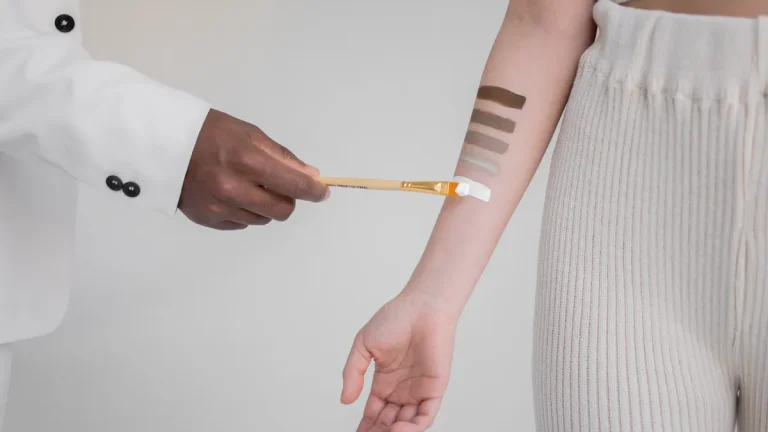
A patch test is the quickest way to screen for a bad reaction, and it should be done for at least 24 to 48 hours before daily use. That does not guarantee underarm comfort, but it catches many obvious problems.
Use this approach:
- Apply a small amount to the inner forearm or behind the ear.
- Leave it on as directed by the product.
- Check for redness, itching, bumps, or burning over the next 24 to 48 hours.
- If there is no reaction, try the product on one underarm for a day before using both.
If the formula contains essential oils or baking soda, be even more cautious. Those ingredients are common troublemakers. If the product stings immediately, wash it off and do not keep testing it.
This matters because underarm skin is a special case: it is warm, occluded, frequently shaved, and exposed to friction. A product that behaves fine on the arm can still fail under the arm. That is why the best “safe” choice is not the fanciest one. It is the one with the fewest likely triggers and enough odor control for your actual day.
The practical shopping rule I would use
The best natural deodorant ingredient list is short, fragrance-light, and built around magnesium or zinc rather than baking soda. That does not sound exciting, but it is the most reliable way to avoid the cycle of buying a pretty stick, getting a rash, and abandoning the whole category.
If you want the one-sentence rule: choose the gentlest formula that still handles your odor, not the strongest formula you can tolerate for one week. That one change saves a lot of skin trouble.
Drafted with AI; not yet reviewed by a person.